
Remote work is easy.
Building a remote team is not.
We’ve been a remote software development company since 2018. Over the years, we’ve learned that working from different places is the easy part. The difficult part is making sure the people still become a team.

In 2017, I spent a year in New Zealand. I worked from all kinds of places — sometimes practically in the middle of nowhere. That experience convinced me that software development doesn’t require an office.
When I started our company in 2018, remote work therefore felt quite natural. I also hoped it would make hiring easier. If people don’t have to live next to our office, why limit ourselves to the local talent pool?
Today, we have a small office in Veszprém, but nobody is required to work there. People can choose where they work. Depending on the project, colleagues may also spend time together at a contractor’s office, from every second week to only a couple of times a year.
COVID made this way of working much more common. Since then, many companies have started moving back toward office-based work. We didn’t. But staying remote taught us something we didn’t fully understand in the beginning:
Remote work solves where people work. It doesn’t solve how people become a team.
A group of remote workers isn’t necessarily a team
Our company didn’t start as a perfectly connected team. For the first half year, I was working alone. Then Robert joined me, followed later by Gábor.
For years, the three of us built the company together. But there were also periods when we worked on completely different projects. We were colleagues. We were building a company together. But quite often, everybody was doing their own thing.
In many ways, we started as three freelancers working under the same brand. Becoming a real team happened much more slowly. And surprisingly, some of the most important things that helped weren’t technical at all.
Our most important meeting is the one without an agenda
Every Friday, we have a 1–2 hour video call with the whole team. It’s on Slack.
Everyone is invited, but participation isn’t mandatory. We don’t move the meeting to another day if someone can’t make it. If something more important comes up, someone simply misses it. The important thing is that we keep doing it.
And we usually don’t talk about work. We talk about:
- holidays
- children
- sport
- hobbies
- health
- movies
- news
- interesting things we’ve discovered
- whatever happens to come up
Sometimes one of the founders throws a completely random topic into the conversation. Recently, for example, a conversation went from dehydration headaches to protein made from locusts.
That’s not a bug in the meeting. That’s the meeting. There is no agenda, no presentation and no expectation that anyone has to report what they accomplished during the week. It’s just a conversation between people who happen to work together. And ironically, the difficult part is usually ending it after one or two hours.
Why talk about things that have nothing to do with software?
Because we don’t want people to know each other only as developers, project managers or customers’ contacts.
If I know that you have children, that you go cycling, that you’re planning a holiday or that you’ve recently become interested in something completely unrelated to software, my relationship with you changes. You’re no longer just a name in Slack. You’re a person I know.
That makes collaboration different. It doesn’t prevent disagreements. It doesn’t magically solve problems. But when you already know and trust someone, disagreements are easier to navigate.
And when you haven’t participated in the Friday conversation for a few weeks, you don’t just miss small talk. You miss the stories, jokes and ideas that gradually become part of the team’s shared history.
Trust is difficult to measure — until you need it
COVID was an interesting period for us. Our connections became more distant. We sometimes had longer spontaneous calls, but the everyday connection was weaker. At the time, I wasn’t completely sure how strong the trust between us really was.
Then something happened that gave me an answer. I was hospitalized, and Robert suddenly had to step in and save the company. I was pleasantly surprised. The trust was there.
You don’t really know how strong a team is until something unexpected happens and people have to rely on each other.
Twice a year, we leave the screens behind
Remote doesn’t mean never meeting in person. We organize team-building events twice a year — usually around the beginning of the year and in early autumn.
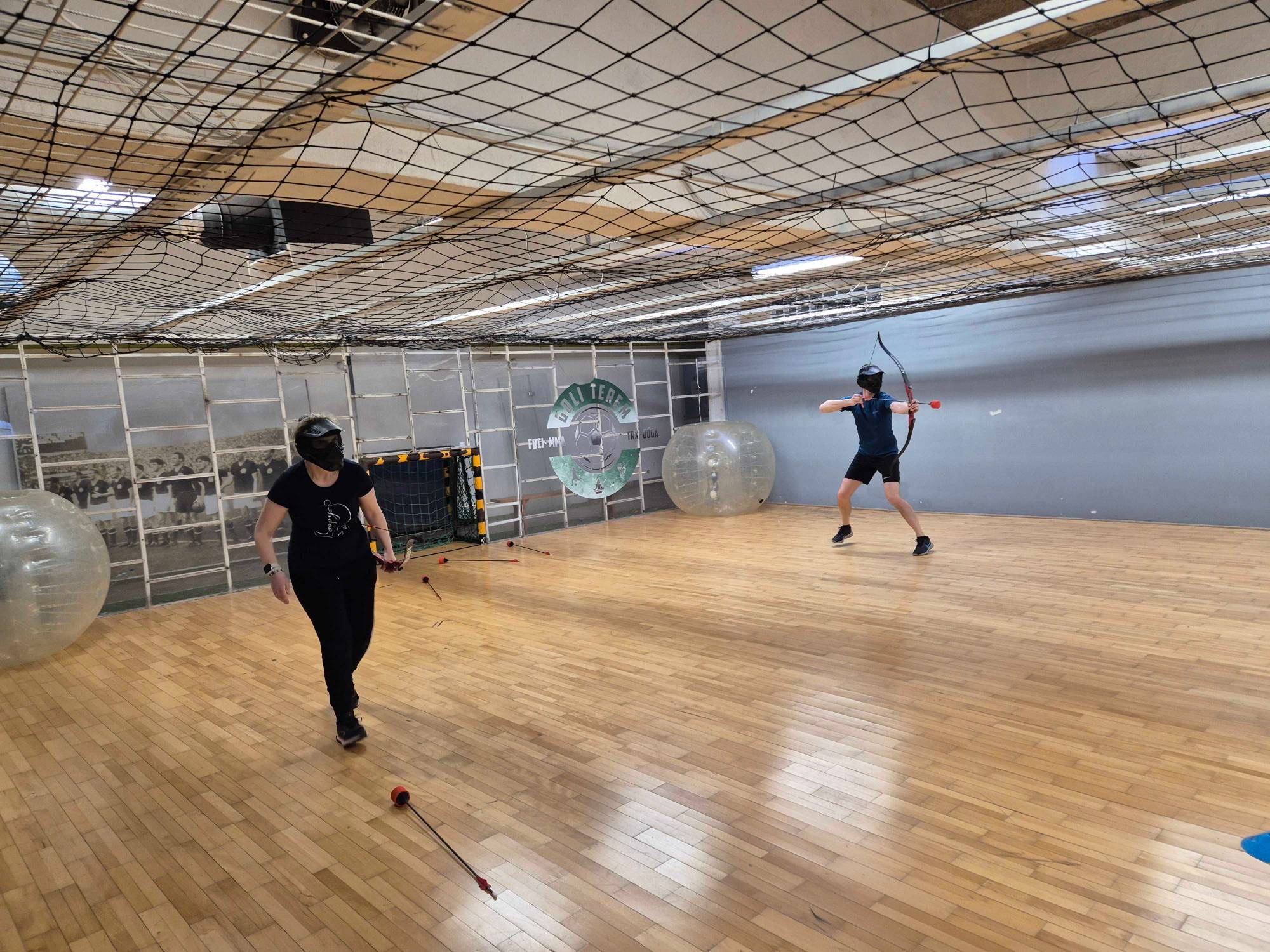
Our formula is fairly simple: do something together. Then go somewhere to eat. We’re not particularly interested in making these events centered around alcohol. We’re not twenty anymore, and most of us have families. We prefer doing something active and then spending some relaxed time together.
We’ve done:
- hiking
- archery tag
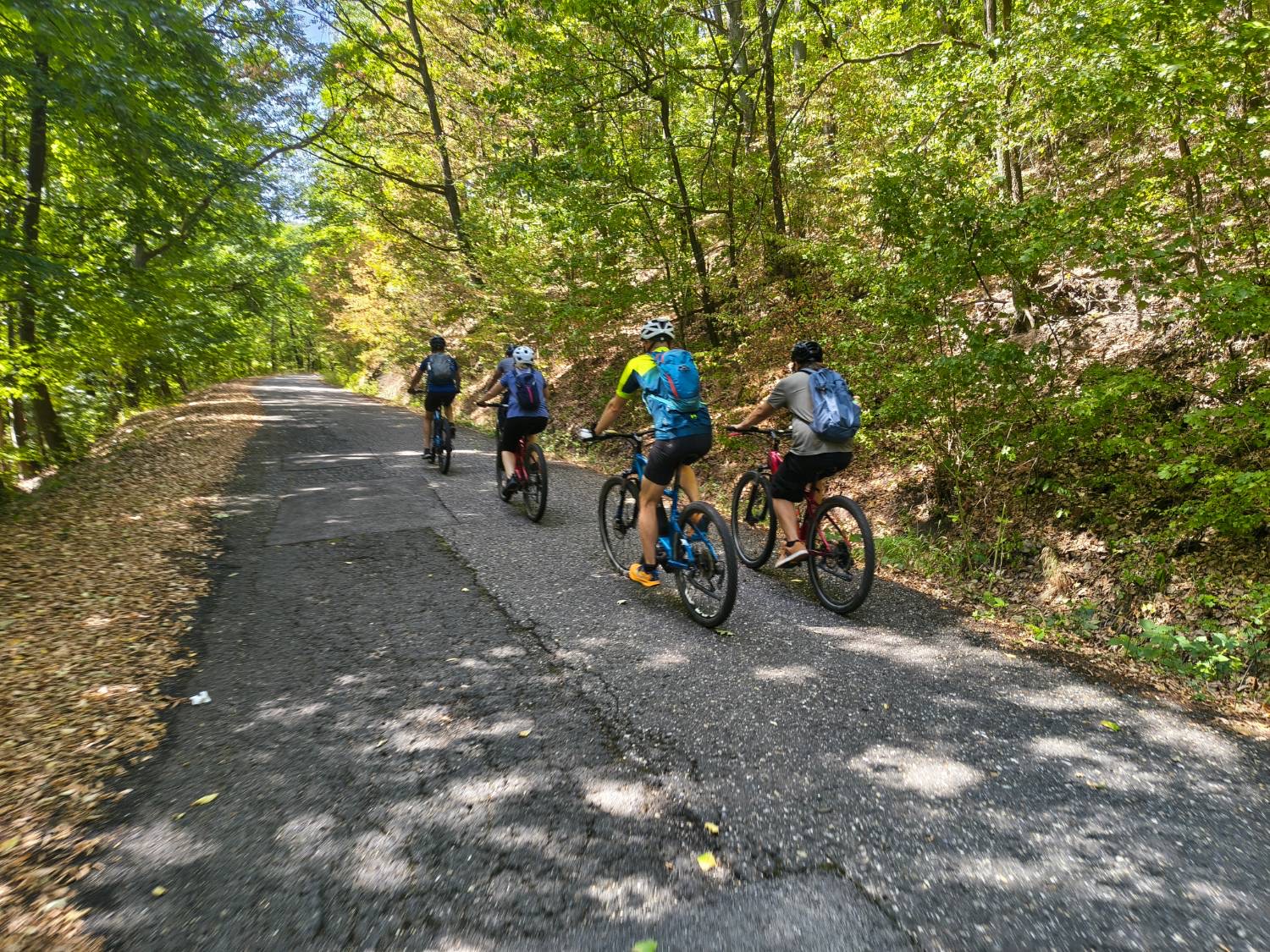
- e-mountain biking
The activities don’t need to be spectacular. They just need to give us something to experience together.

Archery tag has probably been the most memorable so far. We’ve also had less successful experiments. An escape room combined with sightseeing in February wasn’t exactly our best team-building experience. That’s fine.
The objective isn’t to organize the perfect corporate event. It’s to create a memory that belongs to the team.
Let the team choose the activity
The founders usually organize the team-building, but we brainstorm the ideas together. And some of the best suggestions come from the team. Our e-mountain biking experience, for example, was suggested by one of our relatively new colleagues.
That’s important. A team-building event shouldn’t feel like management organizing entertainment for employees. It should be something the people actually want to do together.
We also sometimes join our contractors’ Christmas parties, where families are welcome. And I’ve organized a barbecue at my garden where colleagues and their families could join too. Those informal occasions give us another opportunity to see the people behind the colleagues.
New team members start integrating before they arrive
We don’t want someone to spend six months being “the new person.” When somebody joins us, everyone introduces themselves and the new colleague immediately becomes part of our conversations and activities. We also try to organize a face-to-face team-building experience during their first few months.
But in reality, integration starts before the first day. The conversations around joining the company, meeting the people, understanding how we work and getting a feeling for the culture are already part of becoming a team member.
It still takes time. I’d say around three to six months before someone really feels like part of the team’s relationships. But the process starts earlier than the first day.
Remote work has things we genuinely miss
We don’t pretend remote work is perfect. I miss spontaneous coffee breaks. I miss walking into someone’s room and having a five-minute conversation that unexpectedly becomes useful. I miss spontaneous lunches. And organizing a team event takes considerably more effort when everybody lives in different places.
Those are real disadvantages. But we’ve decided that they’re worth the trade-off.
Small by design
There’s another reason this works for us: we’re small. Today we’re six people. And I don’t want to build a 50-person remote company.
At some point, a Friday conversation with everyone stops being a conversation and becomes another company meeting. At some point, you simply can’t know everybody well enough. For us, something around 10–13 people feels like a reasonable upper limit.
That’s not a business-growth strategy. It’s a culture decision. We’d rather have a small group of people who genuinely know and trust each other than grow indefinitely and try to recreate that feeling with increasingly complicated processes.
From freelancers to a team
Perhaps the most interesting part of our story is that this wasn’t something we designed from day one. We started with three people working together under a company name. Over the years, something gradually changed.
People started knowing each other’s personalities, strengths, weaknesses and lives. They started helping each other in ways that weren’t necessarily part of a task description. We started accumulating shared experiences. And slowly, the people around us became a team that could develop into a trusted engineering partner.
We’re still somewhere in that process. I don’t think there is a point where you can say: “Congratulations. The team is now complete.” You have to keep maintaining it.
So, what actually makes a remote team?
For me, the distinction is quite simple. A group of people working remotely can still be a collection of individuals. A remote team has:
- relationships
- connections
- emotions
- cooperation
- trust
- shared experiences
You can’t build all of that with Slack messages, Jira tickets and meetings about project status.
- You need conversations that don’t have an agenda.
- You need to eat together.
- You need to do something difficult, funny or slightly ridiculous together.
- You need shared stories.
- You need to celebrate achievements.
- And you need to make room for people to know each other as people.
I don’t think a company can remain truly remote and still have a strong team if people only communicate about work.
The irony is that some of the most important things we do to make our remote team work have almost nothing to do with work. And that’s probably exactly why they work.